
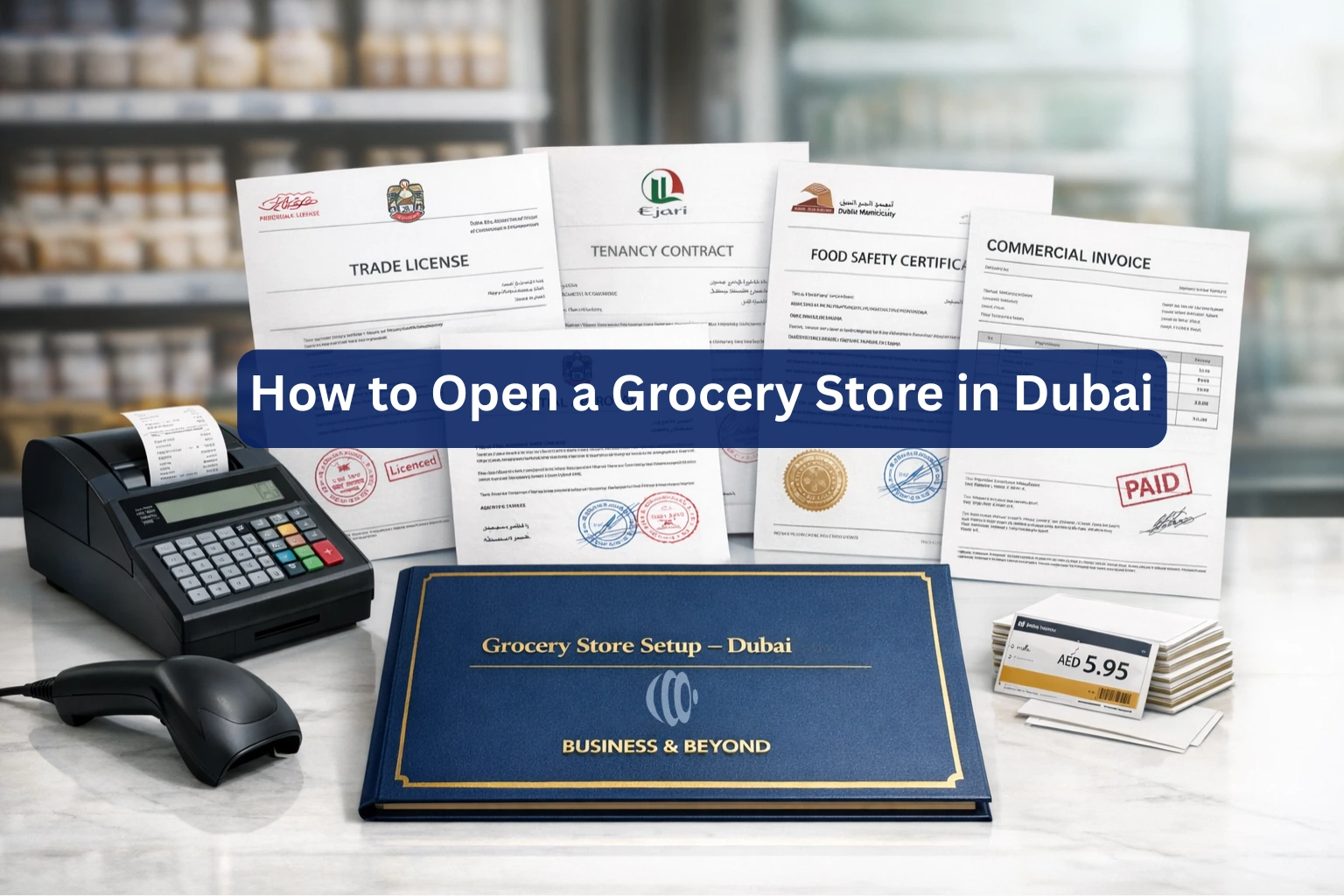
How to Open a Grocery Store in Dubai
Dubai’s fast-growing residential communities, diverse expat population, and high daily consumer spending make grocery stores — often called baqalas — one of the most stable and profitable small businesses in the UAE. Whether you plan to open a neighbourhood convenience store, a speciality organic grocery, or a mid-size supermarket, the opportunity is stronger than ever.
At Business & Beyond Consulting LLC FZ, we support entrepreneurs, investors, and SMEs across Dubai in setting up fully compliant Mainland and Free Zone businesses. This guide explains everything you need to know before opening a grocery store in Dubai — including licensing, costs, profitability, compliance, location rules, and the exact step-by-step process.
Why Open a Grocery Store in Dubai?
1. Consistent, year-round demand
Dubai’s population has crossed 3.7 million and continues to grow fast. Every household, regardless of nationality or income level, needs daily essentials — food, beverages, cleaning items, and household consumables. This creates a stable daily revenue cycle.
2. High density of residential communities
New master communities such as Dubai Hills, JVC, Arjan, Business Bay, and MBR City have become hotspots for neighbourhood groceries. Many buildings require a grocery store within walking distance, making baqalas highly viable.
3. Low entry barrier (compared to other retail sectors)
A grocery business does not require special certifications or complex approvals beyond:
- DED commercial licence
- Dubai Municipality Food Safety registration
- Tenancy contract & Ejari
- POS/invoicing system
This makes it attractive for first-time investors.
4. Integration with e-commerce and delivery platforms
In 2025, groceries can boost revenue by integrating with:
- Noon Minutes
- Talabat Mart
- Careem
- Instashop
Many baqalas earn 30–40% incremental revenue through delivery channels.
5. Stability + profitability
Grocery stores have 3%–12% net profit margins, depending on:
- Location
- Footfall
- Inventory efficiency
- Pricing strategy
Margins are lower than speciality retail but highly stable and predictable.
Mainland or Free Zone — Where Should You Set Up a Grocery Store?
This is a crucial distinction.
➡️ You cannot operate a physical grocery store inside UAE free zones.
Free zones are primarily for:
- Trading
- E-commerce
- Consulting
- Warehousing
- Professional activities
A free zone licence cannot operate a physical retail shop selling to the Dubai public.
Cheapest Free Zone in the UAE (2026): What “Low Cost” Really Means After Banking, Tax & Compliance
➡️ Therefore, grocery stores MUST be licensed under DED Mainland.
This information is rarely stated in competitor articles, but it is an essential regulatory rule.
DED Activity Codes & Licence Requirements for a Grocery Store
To legally open a grocery shop (baqala) in Dubai, you need the following:
Commercial Licence (DED Mainland)
Activity Category: Commercial
Standard Activity: Grocery Store / Foodstuff Trading / Consumer Goods Retailing
This licence allows:
- Packaged foods
- Beverages
- Cleaning items
- Personal care items
- Limited household goods
It does not permit:
- Medical products
- Herbal or pharmaceutical items
- Cosmetics (unless additional activity approved)
- Tobacco (requires separate permit)
Approvals Required
- DED Initial Approval
- Dubai Municipality Food Safety Department
- Ejari (tenancy contract) for the store
- Signboard approval
- POS/invoicing compliance (mandatory for VAT rules)
Learn more: UAE License Amendments & Company Changes (2026)
Cost of Opening a Grocery Store in Dubai
Costs vary depending on location, store size, rental rates, and stock. Below is the most accurate breakdown for 2025:
Total Setup Cost Range
AED 65,000 – AED 275,000
(This includes licence, rent, stock, equipment & approvals)
Cost Breakdown Table (Pricing)
| Cost Component | Estimated Cost (AED) |
|---|---|
| DED Commercial Licence | 12,000 – 18,000 |
| Trade Name & Initial Approval | 920 – 1,200 |
| Ejari / Tenancy Contract | 20,000 – 80,000 (location-dependent) |
| Security Deposit (optional) | 3,000 – 10,000 |
| Fit-out & Interior Setup | 10,000 – 40,000 |
| Shelving & Display Units | 5,000 – 25,000 |
| Refrigerators & Chillers | 8,000 – 35,000 |
| Cash Counter & POS System | 2,000 – 7,000 |
| CCTV System (mandatory) | 1,500 – 5,000 |
| Initial Inventory Stock | 15,000 – 50,000 |
| Municipality Fees | 500 – 2,000 |
| Visa Costs (Investor + Staff) | 4,000 – 12,000 |
Average Total (Small Grocery / Baqala):
AED 65,000–110,000
Average Total (Medium Grocery):
AED 120,000–175,000
Average Total (Supermarket-style):
AED 180,000–275,000
Step-by-Step Process to Open a Grocery Store in Dubai
This is your complete, practical, updated roadmap.
Step 1 — Business Plan & Budgeting
Decide:
- Store size (300–1,200 sq ft)
- Initial investment
- Product categories
- Supplier network
- Delivery integration plan
- Staff requirement
A clear business plan speeds up approvals and prevents unexpected cost overruns.
Step 2 — Choose Your Business Activity (DED)
Select the correct DED activity for consumer goods / grocery trading.
Choosing the wrong activity results in licence rejections, delays, or fines.
Step 3 — Reserve Your Trade Name
The trade name must follow DED rules:
- No offensive words
- No religious references
- No country names or political terms
- Must match signage
The name is valid for 6 months.
Step 4 — Get Initial Approval from DED
Submit:
- Passport copy
- Visa copy
- Proposed activity
- Trade name
- Application form
This approval confirms that the UAE government allows you to proceed.
Step 5 — Choose & Finalise Your Store Location
This is one of the most important steps.
Ideal Locations for a Grocery Store in Dubai:
- Residential neighbourhoods
- High-density apartment clusters
- Worker accommodations
- Office districts (limited)
- New communities with low competition
Avoid areas with multiple established baqalas unless footfall is extremely high.
Checklist for the premises:
- Minimum required area (depends on store model)
- Proper ventilation
- Separate storage area
- Electrical capacity for chillers
- Compliance with Municipality health & safety requirements
Once approved:
- Sign tenancy contract
- Register Ejari
- Submit for DED verification
Step 6 — Apply for the Commercial Licence
After location approval, submit all documents and pay the licence fee.
You will receive:
- DED Commercial Licence
- Establishment Card (for visas)
- Receipt for inspection
Step 7 — Dubai Municipality Food Safety & Hygiene Approvals
This is mandatory for all groceries and food businesses.
Requirements include:
- Safe food storage area
- Temperature-controlled refrigerators
- Proper cleaning procedures
- Waste management plan
- No expired products
- No re-labelling of incorrect expiry dates (strict UAE rule)
Inspections may occur before and after the store opens.
Step 8 — Install POS & Invoicing System
Under UAE VAT and consumer protection rules:
- Every sale must generate a proper invoice.
- The store must maintain a daily cash report.
- POS must integrate with inventory records.
This protects you from penalties and ensures operational efficiency.
Step 9 — Open a Corporate Bank Account
Required documents:
- Trade Licence
- Passport, visa & Emirates ID
- Tenancy contract
- Business plan
- Supplier invoices
Banks may perform a site visit before activation.
Bank Account Opening Assistance in UAE
Step 10 — Visa Processing
You can apply for:
- Investor visa
- Employee visas
- Staff accommodation permits
Processing takes 3–10 working days depending on nationality.
Dubai Municipality Rules Every Grocery Store Must Follow
This section is extremely important and often missing from competitor guides.
1. Product Storage & Temperature Rules
- Frozen goods: −18°C or lower
- Dairy & beverages: 1–5°C
- Dry goods: below 25°C
- No storage on the floor
2. Expiry & Labeling Rules
Every item must show:
- Production date
- Expiry date
- Country of origin
- Batch number
Expired products must be removed immediately or fines apply.
3. Hygiene & Food Safety
Staff must:
- Wear clean uniforms
- Use gloves for handling unpackaged items
- Maintain hand-washing standards
- Prevent contamination of food products
4. Waste Management
Stores must have:
- Covered bins
- Regular disposal schedule
- Non-mixing of food and non-food waste
5. Penalties for Violations (Updates)
- Selling expired products: AED 5,000 – 50,000
- Wrong pricing: AED 1,000 – 10,000
- Selling unauthorized items: AED 2,000 – 20,000
- Failure to display trade licence: AED 500
Equipment Required for a Dubai Grocery Store
- Commercial refrigerators
- Deep freezers
- Display shelves
- POS cash register
- Barcode scanner
- CCTV cameras
- Storage racks
- Weighing scale
- Shopping baskets
Approximate equipment cost: AED 20,000 – 75,000.
How Profitable Is a Grocery Store in Dubai?
Profitability depends on:
- Location
- Supplier pricing
- Inventory turnover
- Product mix
Average Monthly Revenue for a Small Grocery/Baqala:
AED 35,000 – 120,000
Average Net Profit Margin:
3% – 12%
Best-Selling Product Categories
- Drinks & juices
- Snacks
- Dairy & bread
- Cleaning items
- Rice & spices
- Personal care
Break-Even Period
Most groceries recover their full investment in:
10–20 months
With delivery integrations, the period may shorten.
Common Mistakes New Grocery Owners Make
Avoid these to protect your investment:
❌ Choosing a low-footfall location
❌ Overstocking slow-moving products
❌ Not maintaining expiry dates
❌ Poor negotiation with suppliers
❌ No delivery platform integration
❌ Weak branding & signage
Document Checklist to Open a Grocery Store in Dubai
- Passport copy
- Visa copy
- Passport-sized photo
- Trade name reservation
- Initial approval
- Ejari (tenancy contract)
- Location approval
- DED licence application
- Municipality approval
FAQs
1. How much does it cost to open a grocery store in Dubai?
Between AED 65,000 and AED 275,000, depending on size and location.
2. Is grocery business profitable in Dubai?
Yes — groceries have consistent daily revenue and margins of 3–12%.
3. Can I open a grocery store with a Free Zone licence?
No — physical retail stores must be DED Mainland licences.
4. What is the licence type for a grocery store?
A Commercial Licence from Dubai Economy (DED).
5. Do I need Municipality approval?
Yes — Dubai Municipality Food Safety approval is mandatory.
6. Do I need a POS system?
Yes — required for VAT compliance and sales reporting.
Why Set Up Your Grocery Store with Business & Beyond?
Setting up a consumer retail business in the UAE requires accurate licensing, compliance with DED & Municipality rules, and proper financial planning. Business & Beyond Consulting LLC FZ provides:
- Grocery store business licensing
- Full DED Mainland setup
- Municipality Food Safety approvals
- VAT registration & bookkeeping
- Bank account opening support
- POS integration guidance
- Compliance advisory for 2025 UAE regulations
You get end-to-end support from an expert team who ensures your store is fully compliant and ready for profitable operations.
Ready to Start Your Grocery Store in Dubai?
Get a Free Setup Consultation + Custom Cost Estimate
Business & Beyond will guide you through every step — licensing, approvals, budgeting, bank account, and compliance.
Contact Us Today
Let us help you open your grocery store smoothly, quickly, and legally.

Leave A Comment